

The Best Dog Beds for Older Dogs: How to Pick a Senior Dog Bed That Actually Helps (2026 Guide)
Meta description: Learn how to choose the best dog bed for older dogs, including orthopedic support, low entry, sizing, washable materials, temperature control, and accident protection.
Older dogs often sleep more, move less easily, and need more support than they did in earlier years. The right senior dog bed can reduce pressure on hips, elbows, and shoulders while making it easier to lie down, stand up, and change positions.
The best dog bed for older dogs should match mobility, body size, sleeping position, cleaning needs, and temperature preferences. Use the checklist below before buying.
Signs an Older Dog Needs a Better Bed
A dog may need a new bed before the current one looks damaged. Watch for changes in resting and movement patterns.
Common signs include:
- Stiffness after sleeping
- Hesitation before lying down
- Difficulty standing from the bed
- Repeated repositioning during rest
- Choosing the floor over the bed
- Avoiding a bed with tall sides
- Sleeping with hips or shoulders hanging over the edge
- Limping or moving slowly after naps
- Restlessness during the night
- Increased licking around joints
- Visible flattening or permanent depressions in the mattress
These signs can indicate that the bed lacks support, is difficult to access, retains too much heat, or no longer fits the dog’s body. Pain, limping, sudden weakness, or major behavior changes require veterinary evaluation. A new bed supports comfort but does not diagnose or treat arthritis, hip dysplasia, or other medical conditions.
What Makes the Best Dog Bed for Older Dogs?
A senior dog bed should provide four functions:
- Cushion pressure-sensitive joints.
- Support the spine without collapsing.
- Allow easy entry and exit.
- Remain clean and dry during daily use.
“Orthopedic” is not a strict medical certification for pet beds. Evaluate the actual construction instead of relying only on the label. High-density foam, a supportive base, durable fabric, and a stable surface matter more than marketing terminology.
For additional foam comparisons, review How to Choose the Best Orthopedic Dog Beds (Compared).
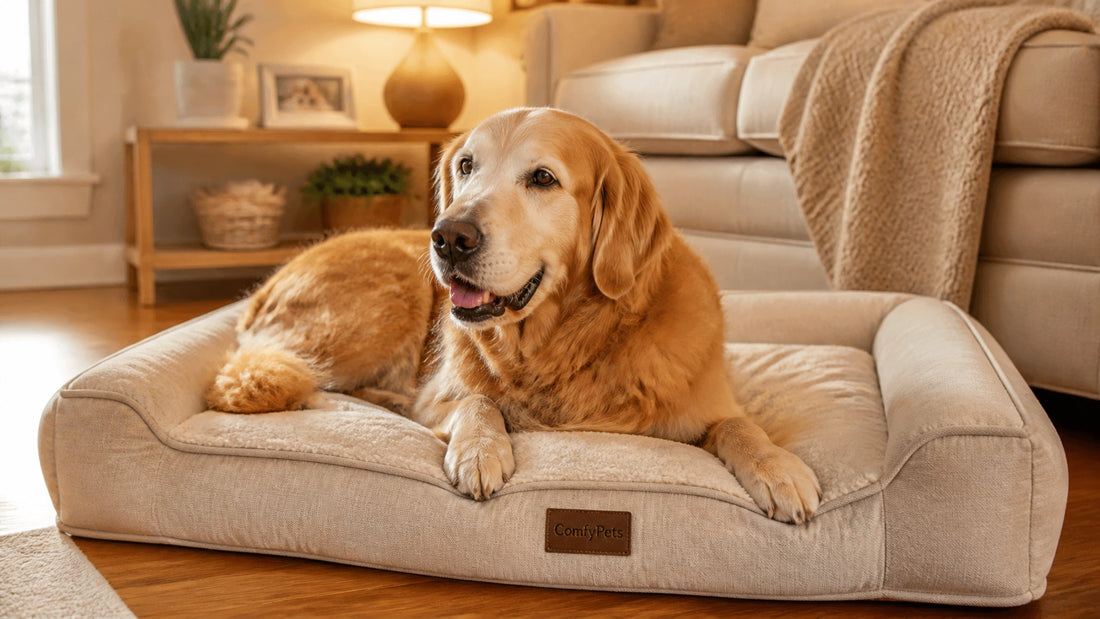
Choose Supportive Foam and the Correct Thickness
Senior dogs generally need more support than a thin fiber-filled cushion provides. Fiberfill can compress unevenly and leave hips or shoulders close to the floor.
Look for:
- Solid memory foam
- High-density orthopedic foam
- Multi-layer foam with a firm support base
- A surface that rebounds after pressure
- Construction that does not bottom out under the dog’s weight
As a general starting point:
- Dogs under 50 pounds: approximately 4 inches of supportive foam
- Dogs between 50 and 90 pounds: approximately 5 to 6 inches
- Large and giant breeds: approximately 6 to 7 or more inches
Thickness alone does not guarantee support. A thick, low-density cushion can collapse faster than a thinner, better-constructed mattress. Press the center of the bed before purchase when possible. The surface should compress under pressure but should not flatten against the floor.
Is Memory Foam Good for Older Dogs?
Memory foam can be a good choice for older dogs because it distributes body weight and reduces concentrated pressure on hips, elbows, and shoulders. It can also help maintain a more even sleeping surface.
Select memory foam with adequate density and ventilation. Some dense foams retain heat, which can make the bed uncomfortable for dogs with thick coats or dogs that sleep warm. A breathable cover, ventilated room, or separate cooling surface can help.
Memory foam should not replace veterinary care for persistent pain or mobility problems.
Select a Low-Entry Design
A high bolster can force an older dog to lift sore legs or step over an unstable edge. A low-entry or open-front bed allows the dog to walk, step, or slide onto the mattress with less joint strain.
A low entry matters most for dogs with:
- Arthritis
- Hip dysplasia
- Weakness in the hind legs
- Short legs
- Previous orthopedic surgery
- Balance problems
- Paw dragging
- Significant stiffness after rest
Look for a three-sided bolster with a lowered front section, or choose a flat orthopedic mattress for dogs with severe mobility limitations.

Does My Old Dog Need a Bed With a Low Entry?
A low-entry bed is useful when an older dog hesitates, stumbles, jumps, or strains while getting into bed. It is also helpful when the dog needs to exit quickly at night.
Observe the current bed. If the dog places both front paws on the edge, struggles to lift a hind leg, or avoids the bed entirely, select a lower design. Do not choose a tall-sided nest bed for a dog that cannot safely step over the sides.
Bolsters remain useful for dogs that like head or neck support. Keep the entry low enough to preserve access.
Measure the Bed for Full-Body Support
Measure the dog while standing and while lying fully stretched out. Measure from the nose to the base of the tail, then add several inches for repositioning.
Choose a larger size when the dog:
- Sleeps on the side
- Stretches the legs outward
- Changes positions frequently
- Shares the bed with another pet
- Has joint pain and needs room to reposition
Match the shape to the sleeping style:
- Side sleepers: rectangular mattress with generous length
- Curled sleepers: bolster or nest design
- Dogs that rest the head: low, stable bolster
- Dogs with severe mobility problems: flat, low-profile mattress
Never use external dimensions alone. Bolsters and thick sides reduce the actual sleeping area.
Prioritize Washable and Waterproof Construction
Senior dogs may experience accidents, increased drooling, or reduced bladder control. Cleaning access becomes a health and maintenance requirement, not a decorative feature.
Prioritize:
- Removable machine-washable cover
- Durable zipper construction
- Waterproof inner liner
- Non-slip bottom
- Quick-drying outer fabric
- Replacement cover availability when offered
A waterproof liner protects foam from urine, spilled water, and damp fur. Foam is difficult to clean thoroughly after deep saturation. Spot-clean foam only according to the manufacturer’s care instructions.
Wash the cover every one to two weeks as a starting point. Increase the schedule for incontinence, allergies, heavy shedding, outdoor exposure, or frequent accidents. Use mild, fragrance-free detergent and dry every component completely before reassembly.
Read The Best Washable Dog Beds: A Complete Buying Guide (2026) for washing procedures and cover features.

Check Temperature and Placement
Older dogs may be less tolerant of temperature changes. Thick foam can retain heat, while thin beds may not provide sufficient joint cushioning.
Use these adjustments:
- Place the bed away from direct drafts.
- Keep the bed away from radiators and heat vents.
- Provide ventilation around dense foam.
- Use breathable covers for dogs that sleep warm.
- Add a cooling option during hot weather.
- Avoid placing the bed on cold tile for dogs with joint stiffness.
- Keep fresh water nearby.
A cooling bed can supplement orthopedic support during warm weather, but it should not replace a supportive mattress for an arthritic dog. Review The Best Cooling Dog Beds for temperature and safety considerations.
Hydration also matters for older pets. Pet Harbor’s water fountain buying guide covers fountain features such as filtration, cleaning, and access to moving water. Consult a veterinarian when drinking habits change significantly.
Consider Fabric Safety and Durability
Senior dogs may lick, scratch, or nest before settling. Select tightly woven, pet-safe materials with reinforced seams and limited loose components.
Inspect the bed regularly for:
- Torn fabric
- Exposed foam
- Loose threads
- Broken zippers
- Damaged waterproof liners
- Sliding on hard floors
- Chewed edges
No dog bed is completely chew-proof. Remove damaged bedding if the dog swallows fabric, foam, thread, or zipper pieces. For dogs that chew bedding, use supervised, durable enrichment such as the Pet Harbor Croc Dental Chew, and remove it if damaged.
Pet Harbor Bed Options to Review
Pet Harbor’s current listings include several soft and cozy bed designs. Check the product page for current dimensions, materials, and care instructions before ordering.
- Soft Plush Pet Bed: a compact plush resting option for dogs that need a soft surface and can enter the design safely.
- Plush Pet Bed: a cushioned everyday bed available in multiple size options.
- Cozy Nest: a contained option for small dogs that prefer a nest-like sleeping area.
For a dog with arthritis or significant mobility loss, prioritize low entry, adequate mattress support, and enough room to stretch over a deeply enclosed design. Browse the Pet Harbor home collection to compare current availability.
Frequently Asked Questions
What thickness of orthopedic foam do senior dogs need?
Approximately 4 inches may suit many small or medium dogs, while large and giant breeds often need 6 to 7 or more inches. Foam density, the dog’s weight, and the bed’s ability to resist compression matter as much as thickness.
Is memory foam good for older dogs?
Yes. Quality memory foam can distribute weight and reduce pressure on joints. Choose a ventilated design with adequate density and avoid beds that retain excessive heat or collapse under the dog.
How often should a senior dog bed be replaced?
Replace the bed when the foam stays compressed, the dog can feel the floor, the cover no longer protects the interior, or the bed develops persistent odor or moisture damage. A heavily used bed may require replacement sooner than a lightly used bed.
Does my old dog need a bed with a low entry?
Choose a low entry when the dog has arthritis, weakness, balance problems, short legs, or difficulty stepping over a raised edge. A flat mattress may be safer for dogs with severe mobility limitations.
Final Senior Dog Bed Checklist
Before purchasing, confirm that the bed:
- Supports the dog without bottoming out
- Fits the dog’s full stretched-out length
- Provides enough thickness for body size
- Has a low or open entry
- Includes a removable washable cover
- Protects foam with a waterproof liner
- Uses a non-slip base
- Allows adequate ventilation
- Matches the dog’s sleeping position
- Has durable seams and safe materials
Shop Pet Harbor’s current dog bed options and select the design that matches mobility, size, sleeping style, and cleaning requirements. Pet Harbor provides 24/7 customer support for product questions and backs eligible purchases with a 30-day return policy.
SEO and Publishing Details
- Targeted keyword: best dog bed for older dogs
- Estimated monthly search volume: Approximately 1,600
- SEO difficulty: 0; low competition
- Reason for choosing the topic: High buying intent, low estimated SEO difficulty, and a distinct senior-dog search intent that does not overlap with previous general orthopedic, washable, or cooling dog bed articles.
- Public PetHarborLLC.com URL: https://petharborllc.com/blogs/news/the-best-dog-beds-for-older-dogs
- Suggested improvements for approval: Add verified dimensions, foam specifications, waterproof-liner details, and care instructions for each currently available Pet Harbor dog bed before publication.
- Three ideas for the next articles: