

Best Puppy Teething Toys: Safe Chews for Growing Teeth (2026 Guide)
Meta description: Find the best puppy teething toys for growing teeth. Learn the teething timeline, thumbnail hardness test, sizing, cleaning, supervision, and what to avoid.
Puppies explore the environment with their mouths. Teething increases chewing because baby teeth loosen while permanent teeth emerge. The correct toy can redirect chewing toward an appropriate object and provide gum stimulation without introducing unnecessary tooth, choking, or blockage risks.
The best puppy teething toys are flexible, correctly sized, easy to inspect, and specifically labeled for puppies. No chew toy is risk-free. Supervision and regular replacement remain required.
Puppy Teething Timeline
Tooth development begins early. Baby teeth typically start emerging at approximately 3–4 weeks of age. Active teething usually begins when baby teeth loosen and permanent teeth start erupting, commonly around 12 weeks.
Most puppies finish the main teething process by approximately 6 months, although timing varies by breed and individual development.
Around 3–12 Weeks: Baby Teeth Erupt
During the first several weeks, puppies develop sharp deciduous teeth. The gums may become tender as additional teeth emerge.
Use only very soft, puppy-specific toys during this stage. Avoid rigid chews, hard plastic, antlers, bones, and any item that does not yield under pressure.
Around 12–24 Weeks: Active Teething
This is usually the most intense teething stage. Baby teeth begin falling out, and adult teeth push through the gums.
Common signs include:
- Increased chewing
- Drooling
- Tender or mildly red gums
- Small spots of blood on a toy
- Missing or loose baby teeth
- Greater interest in cool objects
- Mild irritability during chewing
Offer soft-to-medium rubber toys that flex and pass the thumbnail test. Rotate several suitable options to prevent excessive wear on one toy.
Around 5–6 Months: Adult Teeth Emerge
By approximately 6 months, most puppies have their permanent teeth. Chewing may continue because chewing is normal canine behavior, but the toy selection can gradually expand according to the dog’s size, jaw strength, and chewing style.
Do not automatically move from puppy toys to extremely hard adult chews. Continue checking for flexibility and tooth-safe construction.
What Makes a Puppy Teething Toy Safe?
Evaluate the toy before giving it to a puppy. Product labels, material, hardness, shape, and size all matter.
Use the Thumbnail Test
Press a thumbnail firmly into the toy’s surface.
- A slight indentation indicates that the material yields.
- A toy that bends slightly is generally preferable for growing teeth.
- A rock-hard surface that does not indent should not be used as a puppy teething chew.
- Discard toys that become harder, cracked, sharp, or brittle with age.
The thumbnail test is a basic screening method, not a guarantee of safety. Follow the manufacturer’s age and size guidance. Ask a veterinarian about a puppy with damaged teeth, abnormal chewing, or a history of swallowing toy pieces.
Select Puppy-Appropriate Materials
Soft-to-medium rubber and flexible thermoplastic materials are common choices for teething puppies. Look for clear material information and products labeled for puppy use.
Consider toys with:
- Rounded edges
- Flexible surfaces
- Molded, one-piece construction
- Textured ridges or nubs
- No glued-on decorations
- No small detachable parts
- No long strings or loose fibers
- Easy-to-clean surfaces
Do not assume that “durable” means suitable for a teething puppy. Durability must be balanced with flexibility. A toy can resist tearing while still providing enough give for developing teeth.

Match the Toy to the Puppy’s Size
Choose a toy that is large enough to prevent swallowing but small enough for comfortable carrying and chewing.
Check the product’s recommended weight range. Recheck sizing as the puppy grows. A toy that was appropriate at 10 weeks may become too small several weeks later.
Avoid toys that can fit completely inside the puppy’s mouth. Avoid oversized toys that force the puppy to bite at awkward angles or cannot be carried comfortably.
Choose the Right Shape
Rings, rounded figures, flexible bones, and treat-holding rubber toys can provide different chewing positions. Select shapes without narrow sections that can break or become lodged in the mouth.
A textured design may create more interest, but raised details should not be sharp or detachable. Inspect ridges and openings for damage after each use.
Can Chilled Toys Help Teething Gums?
A chilled toy can provide temporary soothing for tender gums. Use a refrigerator rather than relying on a rock-solid frozen object.
If a toy is designed for chilling or freezing, follow the product instructions. The toy should remain flexible after cooling. Do not give a toy that becomes rigid, brittle, or difficult to indent when cold.
A practical routine:
- Clean the toy according to its care instructions.
- Place it in the refrigerator if the material and manufacturer allow chilling.
- Check the toy for rigidity, cracks, or sharp edges.
- Offer the toy during supervised chewing.
- Remove the toy when it warms, breaks, or begins shedding pieces.
Do not add food, broth, or other fillings unless the product is designed to hold them and the ingredients are appropriate for the puppy.
Supervise Every Chew Session
Supervision is required, especially during the first use of a new toy. Stay close enough to remove the toy if the puppy begins tearing, swallowing, or breaking off pieces.
Watch for:
- Deep punctures
- Cracks
- Sharp edges
- Missing sections
- Loose rubber or plastic
- Fraying fibers
- Exposed squeakers
- Difficulty carrying or releasing the toy
- Gagging or repeated coughing
A puppy that immediately destroys a toy requires a different material, shape, or size. Breed does not determine chewing strength by itself. Observe the individual puppy’s behavior.
Do not leave rope, plush, or fabric toys available for unsupervised chewing if the puppy pulls apart seams or swallows fibers. Long strands can create digestive obstruction risks.
Cleaning and Replacing Puppy Teething Toys
Clean toys regularly. Food residue, saliva, and debris can collect in grooves and openings.
Use the manufacturer’s cleaning instructions. If no instructions are available, avoid heat, detergents, or disinfectants that could alter the material. Rinse thoroughly and allow the toy to dry fully before returning it to the puppy.
Inspect toys daily during active teething. Replace a toy immediately when:
- A piece is missing
- A crack extends through the toy
- The surface becomes sharp
- The puppy can remove chunks
- A squeaker or internal component becomes exposed
- The toy becomes small enough to swallow
- Rope fibers form long strands
- Mold, odor, or permanent contamination remains after cleaning
Do not wait for complete destruction. Retire a toy when damage creates a possible swallowing, choking, or mouth-injury hazard.

What to Avoid for Teething Puppies
Avoid items that are excessively hard, splinter easily, or break into swallowable pieces.
Antlers, Hooves, and Hard Bones
Antlers, hooves, and very hard bones can fracture teeth or break into sharp fragments. Cooked bones can splinter. Raw bones also carry food-safety and injury concerns.
If a chew feels like a rock and cannot yield under pressure, select a softer alternative.
Rigid Nylon and Hard Plastic
Some nylon products are intended for adult dogs with permanent teeth. Rigid nylon may be inappropriate for a puppy, particularly when the item fails the thumbnail test.
Choose puppy-specific products only when the hardness and size match the manufacturer’s guidance.
Rawhide and Large Edible Pieces
Rawhide and other chews can become hazardous when a puppy tears off and swallows large sections. A puppy with a history of gulping non-food items requires additional caution and veterinary guidance.
Sticks and Splintering Materials
Sticks can splinter and injure the mouth, throat, or digestive tract. Do not use household objects as substitutes for puppy teething toys.
Toys With Small Parts
Avoid buttons, ribbons, plastic eyes, loose tags, detachable squeakers, and other parts that can be removed by sharp puppy teeth.
When to Contact a Veterinarian
Mild gum soreness and tiny blood spots can occur during normal teething. Contact a veterinarian for:
- Persistent or heavy bleeding
- Significant gum or facial swelling
- A strong foul odor
- Obvious mouth pain
- Difficulty eating or drinking
- A retained baby tooth
- “Double teeth,” where a baby tooth and adult tooth occupy the same location
- A crooked adult tooth or abnormal bite
Retained baby teeth can crowd permanent teeth and contribute to discomfort or dental problems. Do not pull a retained tooth at home.
For additional guidance, review the PetMD puppy teething toy guide and VCA’s information on puppy teeth, teething, and chewing.
Pet Harbor Chew Options
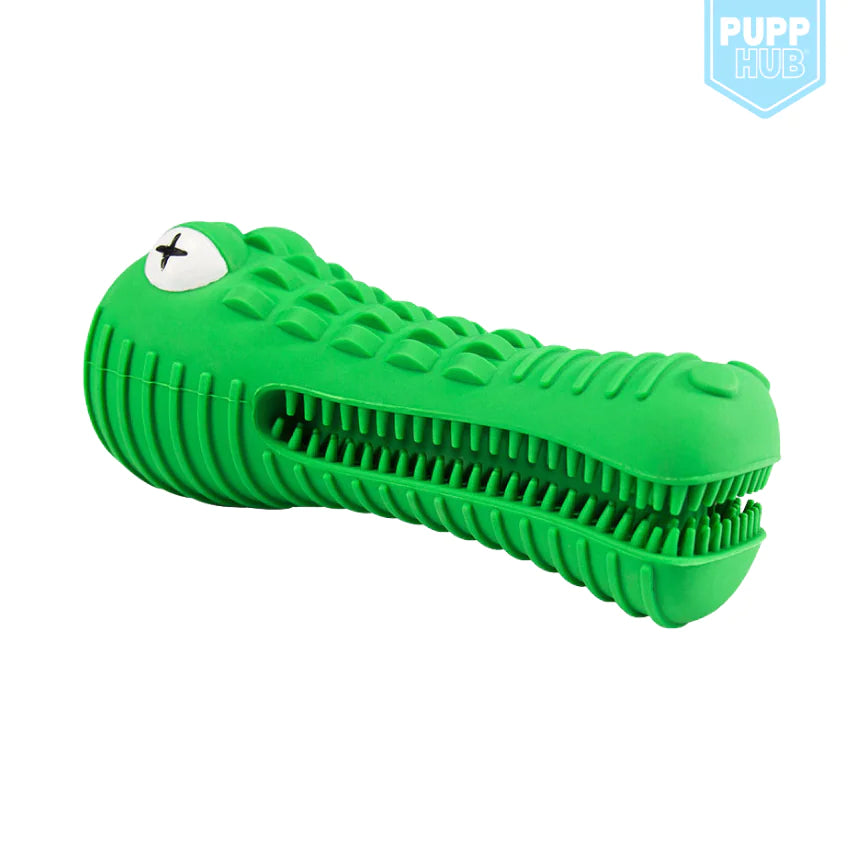
Pet Harbor’s Croc Dental Chew is listed with durable, pet-safe materials and a textured crocodile-style design. The product page does not establish that the item is intended specifically for teething puppies.
Review the current product details, size information, and hardness before purchase. Use the toy only if the manufacturer’s guidance matches the puppy’s age, size, and teething stage. Confirm that the toy passes the thumbnail test and supervise initial use.
For broader comparisons of materials, construction, and chew strength, read The Best Durable Chew Toys for Dogs. That guide targets adult and aggressive chewers; puppy teething requires softer, stage-appropriate choices.
Puppy Teething Toy Checklist
Before offering a toy, verify:
- Puppy-specific age guidance is available.
- The toy matches the puppy’s current size.
- A thumbnail can leave a slight indentation.
- The surface has no sharp edges.
- The toy has no detachable parts.
- The toy cannot fit completely inside the puppy’s mouth.
- The toy can be cleaned according to its instructions.
- The puppy will use it under supervision.
- Replacement is possible when wear appears.

Final Recommendation
Start with one or two flexible rubber toys labeled for puppies. Select the correct size. Use chilled: not rock-solid frozen: options when permitted by the manufacturer. Inspect every toy before and after use. Replace damaged items immediately.
Review Pet Harbor’s Croc Dental Chew for a durable chew option, and confirm puppy suitability before purchase. Contact Pet Harbor customer support for product questions, sizing information, or help reviewing available options.
Sources
- PetMD: Get the Right Puppy Teething Toys for Each Puppy Stage
- American Kennel Club: Which Dog Toys Are Right for Your Puppy?
- VCA Animal Hospitals: Teeth, Teething, and Chewing in Puppies
- VCA Animal Hospitals: Retained Deciduous Teeth in Dogs
- Pet Harbor: Croc Dental Chew
Targeted keyword: puppy teething toys
Estimated monthly search volume: 22,200
SEO difficulty: 0/100
Reason for choosing this topic: The keyword combines high search demand with commercial and informational buying intent. This article targets puppies specifically and separates teething-stage safety from the existing Pet Harbor topic targeting durable chew toys for dogs.
Public PetHarborLLC.com URL: https://petharborllc.com/blogs/news/best-puppy-teething-toys-safe-chews-growing-teeth-2026-guide
Three ideas for next articles:
- How to Choose the Right Dog Toy Size for Every Puppy Breed
- Rubber vs. Nylon Puppy Chews: Hardness, Cleaning, and Safety
- How to Stop Puppy Biting and Redirect Chewing Safely